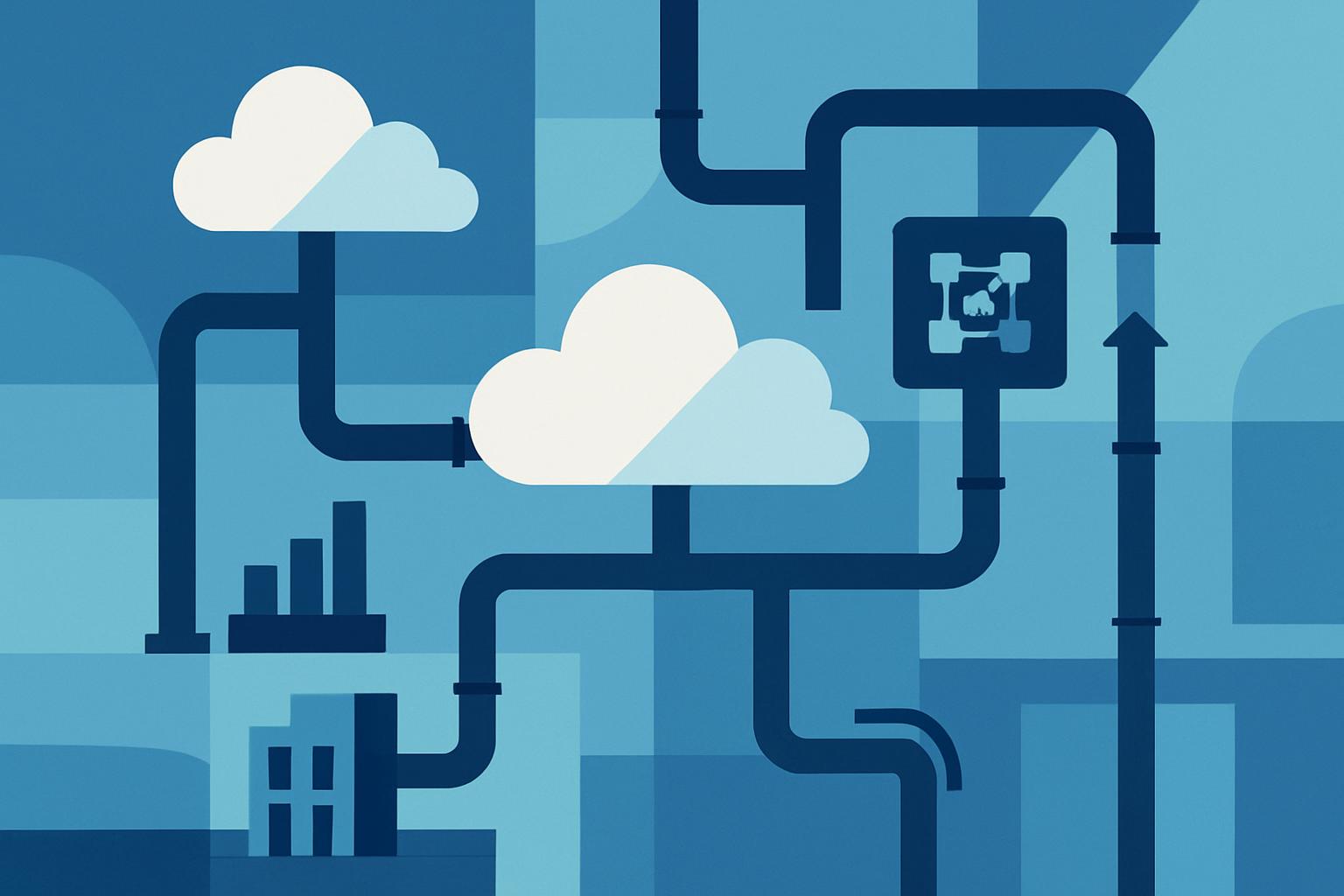
PaaS (Platform as a Service) is the city plumbing for digital innovation, offering a managed, scalable cloud platform for deploying and running applications without the burden of infrastructure maintenance. In BI and AI, PaaS accelerates the delivery of analytics and smart services by abstracting away server and OS management.
Importance
Faster Application Delivery
Developers and DevOps teams can focus on building features and deploying value, since PaaS handles the groundwork like servers, storage, and managed runtime. This often shortens deployment cycles by 30–50%.
Operational Cost Savings
PaaS reduces total cost of ownership by automating patching, updates, and scaling. IT managers typically see lower overhead and reduced downtime compared to self-managed environments.
Built-in Scalability
The managed platform services scale automatically to match workload demand. For SaaS and fintech startups, this supports rapid growth without overprovisioning resources.
Modern Dev Environment
PaaS enables access to cloud-native tools, integrations, and CI/CD pipelines, providing a seamless city plumbing architecture for cloud development platforms.
Supports Compliance and Security
Providers embed security best practices and compliance controls, making it easier for regulated industries—like fintech—to meet requirements.
Related Tech
Google App Engine
Offers a scalable, fully managed platform to deploy cloud native applications, handling the plumbing needed for rapid delivery.
Azure App Service
Provides integrated tools and frameworks for quick app deployment without worrying about the infrastructure 'pipes' beneath.
AWS Elastic Beanstalk
Automates orchestration, scaling, and health monitoring, letting teams focus on application flows rather than platform maintenance.
Heroku
Simplifies app deployment with a developer-friendly interface, abstracting city plumbing for small and fast-moving teams.
Common Use
SaaS Application Launch
Startups use PaaS to launch cloud-based services rapidly, leveraging built-in managed runtimes to streamline deployment and scaling.
Real-time Analytics Pipelines
Fintech and technology companies build and operate real-time BI dashboards using PaaS platforms for reliable and cost-effective data ingestion.
Machine Learning Model Hosting
Developers deploy trained ML models on PaaS, benefiting from managed hosting, versioning, and secure endpoints.
API Gateways for Mobile Apps
Teams deploy APIs on PaaS for scalable, secure communication between mobile customers and backend systems.
Who Needs To Know
Vendor Lock-in Risk
Understanding each provider’s proprietary plumbing is essential; migration may require code changes or reconfigurations.
Security Shared Responsibility
Teams must still secure app logic and data, even as the platform maintains underlying 'pipes' and security patches.
Service Quotas and Pricing
Every PaaS platform enforces usage quotas and billing models; accurate forecasting prevents disruption and cost surprises.
DevOps Integration
Integrating CI/CD workflows is vital to leveraging the city's plumbing for rapid and repeatable deployments.
Cloud-Native Design Patterns
Adopting patterns like microservices and stateless apps aligns best with how PaaS platforms are plumbed.
Advantages
Accelerates Innovation
By offloading infrastructure, teams spend up to 40% more time on building BI and AI features, reducing time-to-market.
Reduces Unplanned Downtime
Automated scaling and monitoring lower the risk of outages, supporting 99.9%+ uptime for mission-critical apps.
Scalable to Demand
Applications on PaaS platforms scale automatically, accommodating spikes in analytics or user activity with minimal operational input.
Challanges
Platform Limitations
Custom system requirements may be hard to implement; choose a PaaS with flexible service integrations to mitigate gaps.
Hidden Costs
Unexpected scaling and integrations can incur extra charges; proactive monitoring and cost tracking limit overspend.
Compliance Complexity
Managing sensitive fintech data may introduce complexities; verifying provider certifications (e.g., SOC2, PCI-DSS) offers protection.
Migration Complexity
Moving from one PaaS to another may present significant challenges; designing with portability in mind helps ease transition.
Other Terms
IaaS (Infrastructure as a Service)
Delivers raw computing resources; contrasts with PaaS, which manages the full city plumbing and runtime.
SaaS (Software as a Service)
Delivers ready-to-use applications, whereas PaaS offers the plumbing to build and deploy custom apps.
Serverless
Focuses on event-driven execution, abstracting even more infrastructure than PaaS, with similar managed plumbing benefits.
Managed Database Service
Provides hosted, scalable data storage as part of platform plumbing—often consumed alongside PaaS.
A few Examples
SaaS for Customer Analytics
A SaaS startup used Google App Engine to launch a customer analytics dashboard. With city plumbing managed, they delivered MVP in 3 weeks—half typical timelines—and scaled easily with usage growth.
Fintech Model Deployment
A fintech team deployed fraud detection models on AWS Elastic Beanstalk, leveraging PaaS for rapid iteration and secure hosting. Downtime dropped by 80% versus their legacy VM-based environment.
FAQ
Is PaaS suitable for regulated industries?
Yes, but IT managers should verify the provider’s compliance certifications and understand their shared responsibility model, as detailed in compliance complexities above.
How does PaaS differ from IaaS or SaaS?
PaaS supplies the city plumbing for creating custom apps, while IaaS offers only basic infrastructure and SaaS delivers complete end-user solutions.
Do PaaS platforms limit technology choices?
Some platforms have proprietary components which can limit frameworks or languages; see platform limitations and plan for flexibility.
Summary
Summary: PaaS as the City's Plumbing for Application Delivery
PaaS operates as the city plumbing for digital businesses, invisible yet essential for delivering scalable, secure, and fast applications in BI and AI environments. Nogamy helps teams navigate PaaS choices, designing efficient 'pipes' that keep your development and analytics flowing smoothly.
Talk to Nogamy’s BI & AI team.
Explore a discovery workshop or consult with experts at Nogamy.co.il to design your scalable, future-ready PaaS architecture.