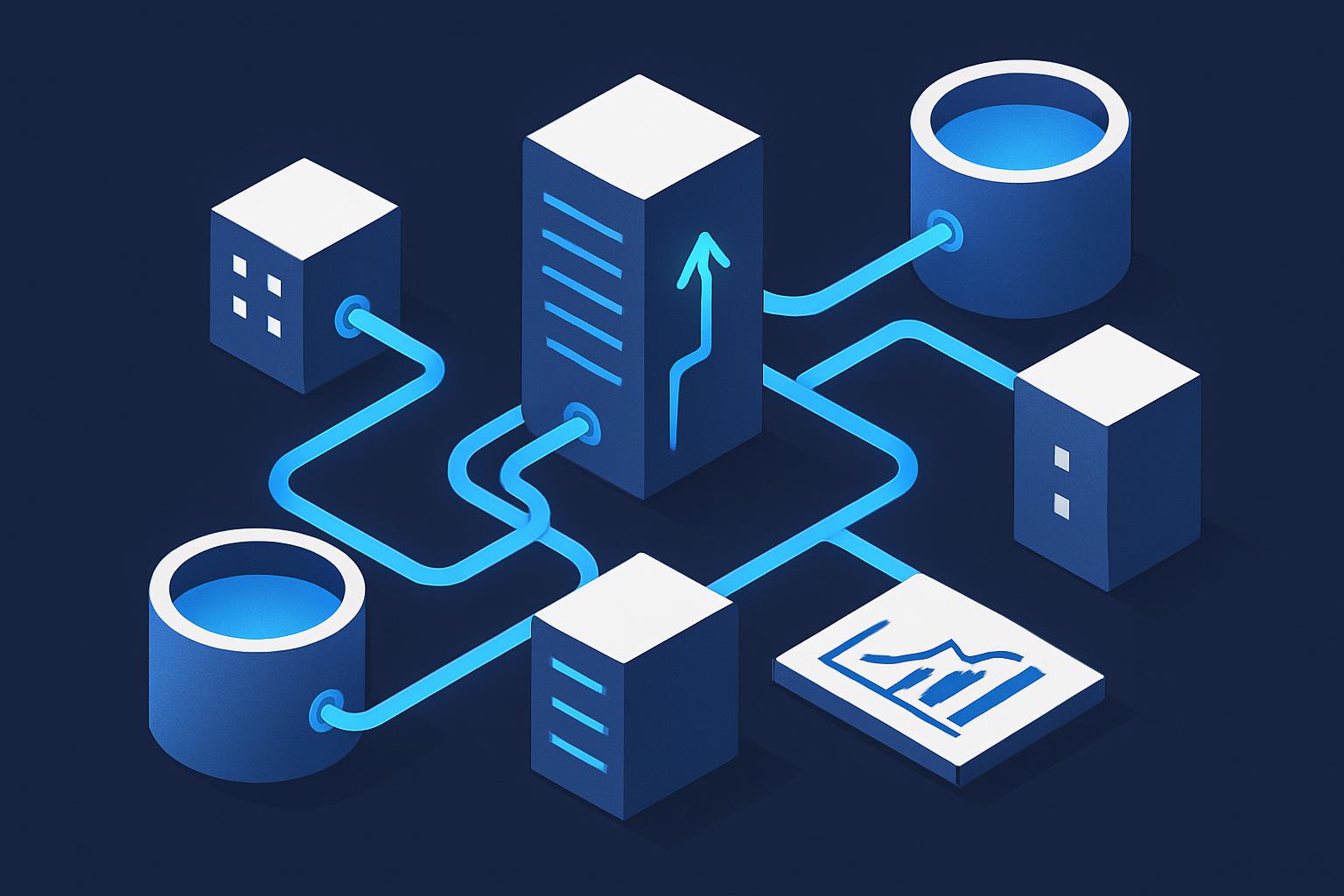
Batch processing is the city plumbing for insights—scheduled data handling (often nightly or hourly) that transforms raw data into analytics-ready formats, rather than reacting in real time. It forms the backbone of efficient BI and ETL, especially for routine, high-volume data workloads.
Importance
Ensures Data Pipeline Efficiency
Data engineers and BI teams rely on batch processing to move and transform large volumes of information predictably, much like well-designed city plumbing keeps water flowing reliably. Scheduled jobs reduce operational overhead for recurring processes.
Supports Historical Analysis
Batch processing enables the aggregation and cleansing of datasets over fixed intervals (often at night), allowing analysts to build comprehensive historical reports that inform long-term business strategy. This alleviates the need for high-cost, always-on streaming infrastructure.
Optimizes Resource Utilization
By running intensive workloads during off-peak hours, batch jobs prevent system congestion and reduce compute costs, maximizing the value of investments in technologies like Spark and BigQuery.
Enables Compliance and Auditability
Scheduled batch pipelines create auditable checkpoints, making it easier to adhere to data governance and regulatory policies. Logging and data lineage are clear, as in city plumbing where inspection points are well defined.
Related Tech
Spark
Apache Spark handles large-scale batch data transformations with high throughput, serving as a central 'pipeline' component for complex ETL within the city plumbing analogy.
Airflow
Apache Airflow orchestrates, schedules, and monitors batch workflows, ensuring the smooth routing of data just like the valves and timers in smart plumbing systems.
BigQuery
Google BigQuery enables scalable batch inserts and transformations, storing analytics-ready outputs in the data warehouse. It serves as the reservoir in the city's data plumbing.
Common Use
Nightly Data Warehouse Loads
BI developers in finance and retail often set up nightly batch jobs to ETL transaction data, ensuring updated dashboards are ready by morning. This is the most common application of scheduled batch data processing.
Periodic Compliance Audits
Data engineers invoke batch jobs to compile compliance reports and audit trails overnight, streamlining regulatory checks in healthcare and financial sectors.
Bulk Data Cleansing and Deduplication
Analysts use batch processing for intensive cleansing tasks—removing duplicates or correcting formats across millions of rows—scheduled during low-traffic windows for better performance.
Who Needs To Know
Understand Batch Scheduling
Grasping timers, triggers, and cron-like scheduling is essential. As city plumbing follows set routes, batch jobs follow defined schedules—often at night or during hours of low demand.
Pipeline Monitoring and Error Handling
Like city pipes needing pressure gauges, data pipelines require robust monitoring, alerting, and failover strategies for reliability.
Data Governance Principles
Batch processing must comply with retention, lineage, and data privacy standards, ensuring traceability and auditability throughout the pipeline.
Resource Management
Awareness of compute, storage, and I/O requirements ensures jobs don't overrun system capacity or spike costs during execution.
Advantages
Reduced Operational Overhead
Automated, scheduled processing saves teams dozens of manual hours per week, as seen when Airflow handles multi-step ETL pipelines.
Cost Efficiency
Off-peak scheduling and resource pooling can cut compute expenses by 20–40% compared to real-time streaming.
Predictable Output Quality
Routine, repeatable jobs ensure consistent data hygiene, with batch jobs catching errors systematically—similar to regular city plumbing maintenance.
Challanges
Handling Latency
Batch cycles introduce data freshness lags; it's crucial to assess if delayed availability meets business needs, or blend with incremental loads.
Operational Failures or Delays
Failed jobs or resource bottlenecks can disrupt downstream analytics; proactive alerting and retry strategies, like those in Airflow, help mitigate risks.
Version Control and Change Management
Changes to batch pipelines are like modifying city infrastructure—require thorough testing and rollback plans to avoid service disruption.
Other Terms
Real-Time Processing
Unlike batch processing, real-time (streaming) ingests and reacts to data instantly—best for use cases where low latency is critical.
ETL (Extract, Transform, Load)
Most batch jobs are part of the ETL lifecycle, pulling in data, transforming it, and loading it into analytics systems.
Data Orchestration
Refers to managing the execution order and dependencies of batch and other jobs, commonly with tools like Airflow.
Incremental Loads
A pattern where only changed or new data is processed in each batch, reducing workload and latency.
Data Lake
Often the landing point for batch-processed data before further transformation or analysis.
A few Examples
Retail Sales Dashboard Refresh
A major retailer schedules Spark-driven batch jobs to aggregate sales from 500 stores overnight, updating Power BI dashboards by 7am daily. The solution reduced manual data preparation time by 80%.
Healthcare Compliance Reporting
Hospitals schedule BigQuery batch pipelines nightly to create auditable logs of patient record access, achieving 99.5% compliance readiness and eliminating weekend reporting backlogs.
FAQ
Is batch processing outdated?
Not at all. While streaming is gaining ground for real-time needs, batch processing remains cost-effective and scalable for periodic reporting, data cleansing, and ETL in most enterprise use cases.
How does batch processing integrate with cloud platforms?
Cloud services like BigQuery and managed Airflow provide scalable resources, easy scheduling, and built-in monitoring—evolving the city plumbing metaphor to a digital, cloud-native infrastructure.
Can batch and real-time processing co-exist?
Yes. Many organizations combine batch for bulk, routine jobs and streaming for fast-moving or critical signals, balancing cost, complexity, and data freshness.
Summary
Keeping Your Data Plumbing Flowing
Batch processing forms the city plumbing for insights, ensuring data flows smoothly and reliably through the analytics system. Like expert plumbers, Nogamy builds robust, future-proof BI and AI pipelines that keep your organization’s data infrastructure efficient and cost-effective.
Talk to Nogamy’s BI & AI team.
Ready to future-proof your batch pipelines and optimize resource efficiency? Schedule a discovery workshop with Nogamy.co.il.