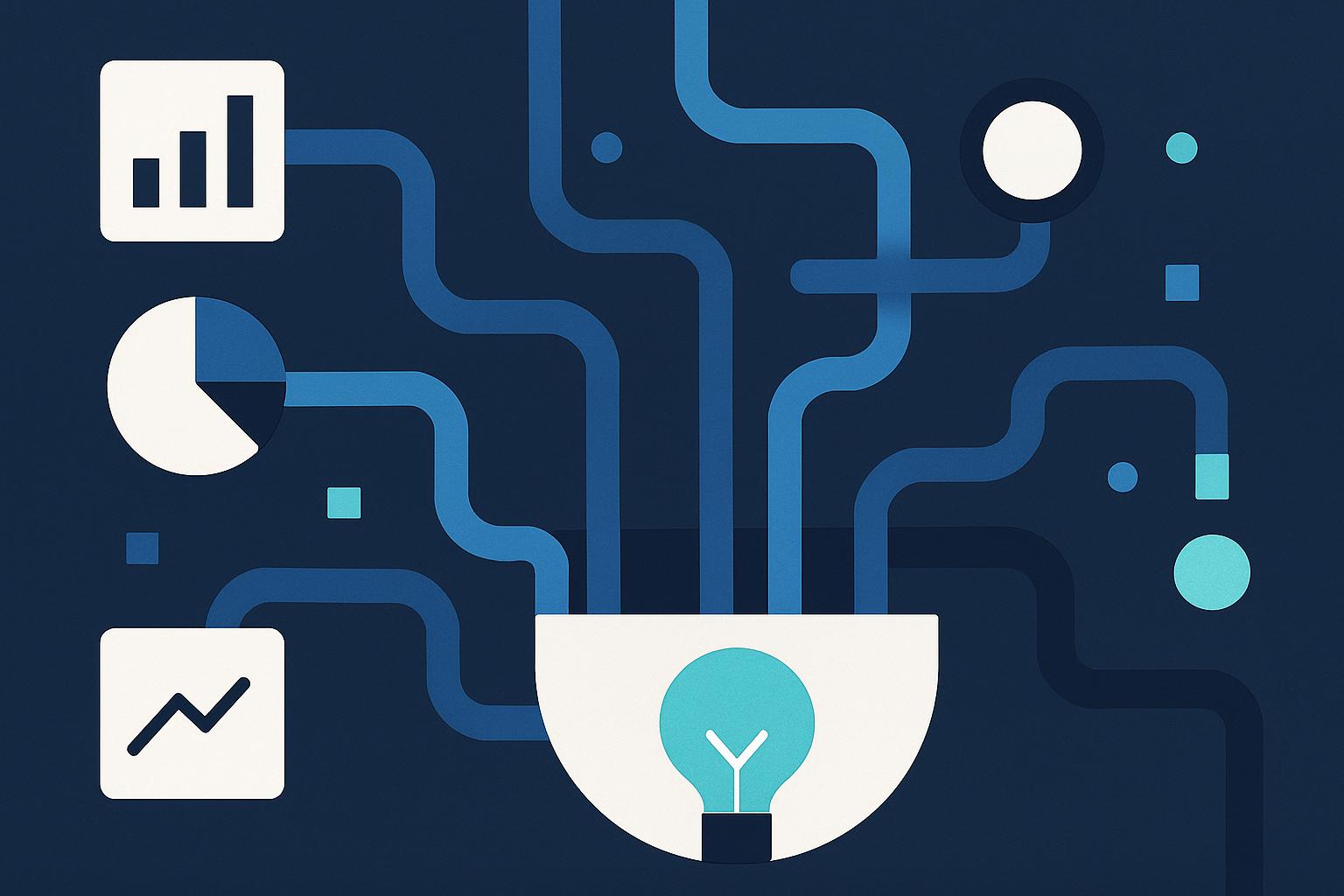
Data integration acts as the city plumbing for insights—combining streams from diverse pipelines into a single, usable flow for analytics and operations. In BI and AI, it enables organizations to bridge data silos, powering unified reporting and streamlined decision-making.
Importance
Eliminates Data Silos
By treating the organization’s systems as interconnected pipes, data integration ensures data from CRM, ERP, and external sources flows into a consolidated environment. This unified stream is critical for executives and analysts needing accurate, holistic reporting.
Enables Advanced Analytics
Integrated data forms the foundation of machine learning, predictive analytics, and AI. Using data integration tools, teams can ensure models have access to broad, clean, and up-to-date datasets for richer insights, as seen in healthcare and telecom sectors.
Improves Operational Efficiency
Automated pipelines save IT managers and data engineers hours per week once manual data gathering and transformation are replaced with robust connectors. This cuts response time to market changes and lowers total cost of ownership.
Enhances Data Quality
Joining various sources through structured source to target mapping and consistency checks reduces errors and conflicting data—providing trustworthy insights for business decisions as required in retail and healthcare.
Related Tech
Fivetran
Fivetran automates the plumbing between dozens of data sources and central data warehouses, enabling seamless extraction and transformation without heavy IT overhead.
Stitch
Stitch streamlines ETL workflows, allowing quick setup of new connectors—ideal for organizations that need to frequently plug new data streams into their analytics city pipeline.
MuleSoft
MuleSoft acts as the connective infrastructure in large enterprises, providing advanced mapping, orchestration, and governance to handle complex integration challenges effectively.
Common Use
Retail Sales Consolidation
National retailers connect POS, inventory, and ecommerce pipelines using data integration tools such as Fivetran to create real-time sales dashboards and optimize stock levels.
Telecom Customer Analytics
Telecom companies use MuleSoft to unify billing, usage, and CRM data for advanced churn modeling and personalized customer campaigns, avoiding data leaks across legacy platforms.
Healthcare Patient Journeys
Healthcare IT managers rely on Stitch to merge lab, appointment, and EMR data—producing unified patient profiles for analytics teams and regulatory reporting, as seen in the examples below.
Who Needs To Know
Source to Target Mapping
Understanding how raw data fields map to target schemas is essential. Poor mapping can break the city plumbing—leading to loss of critical information or incorrect analytics outcomes.
Data Quality and Governance
Data integration is effective only when quality checks and governance frameworks are embedded, ensuring that integrated flows remain reliable and compliant, especially in regulated sectors like healthcare.
Connector Ecosystem
Familiarity with the available data connectors (for platforms like Fivetran and MuleSoft) allows data engineers to quickly assemble new pipelines, minimizing manual work and error potential.
Advantages
Faster Analytics Cycle
Automated integration shifts teams from manual data stitching to instant access, reducing time-to-insight by up to 60% and shrinking reporting backlogs, as seen in telecom analytics.
Reduced IT Overhead
Leveraging modern integration tools eliminates the need for custom scripts, translating to a 30-50% reduction in maintenance burdens for IT managers.
Scalable Growth
Centralized data flows mean that as organizations onboard new tools or business units, integration scales with minimal disruption—supporting growing data volumes without a plumbing overhaul.
Challanges
Data Drift and Schema Changes
When source systems change, pipelines can break. Proactive monitoring and versioned mapping definitions, as supported in MuleSoft, help mitigate downstream disruptions.
Integration Latency
Batch integrations may not meet real-time requirements. Leveraging incremental syncs or streaming where possible can keep the city's analytics plumbing flowing smoothly.
Security and Compliance Risks
Consolidating sensitive data increases exposure. Implementing encryption and strict access controls within integration tools addresses these regulatory concerns.
Other Terms
ETL (Extract, Transform, Load)
ETL describes the sequence of extracting data from sources, transforming it for consistency, and loading into a target system—core to any data integration process.
Data Federation
While integration unifies data physically, federation allows querying data across sources in place—offering flexibility with some trade-offs in performance and governance.
Data Warehousing
A data warehouse acts as the central reservoir where integrated data is stored, optimized for reporting and analysis.
A few Examples
Retail Inventory Analytics
A chain retailer implemented Fivetran, reducing data aggregation time for weekly sales reports from 3 days to 4 hours, directly improving inventory response and saving IT 40 labor hours per month.
Telecom Churn Prediction
A telecom firm leveraged MuleSoft to merge customer call, billing, and support data. The new integrated view enabled a predictive churn model, leading to a 12% reduction in monthly churn.
FAQ
What is the main advantage of automated data integration tools?
Automated tools like Fivetran and Stitch handle ongoing source changes and data mapping, greatly reducing manual effort and risk of errors for IT managers and data engineers.
Is real-time integration possible across all systems?
Not always. While some pipelines allow near real-time flows, legacy systems or batch processes may require scheduled updates. Proper tool selection and architecture address this challenge.
How does data integration impact data quality?
Well-designed integration pipelines enforce consistency and validation at each stage, minimizing data discrepancies and producing more accurate and reliable business intelligence.
Summary
Keeping the Analytics Plumbing Flowing Smoothly
Just as a well-maintained city plumbing system keeps every tap running, data integration ensures information flows efficiently across business units for analytics and operations. Nogamy’s expertise helps organizations design and manage these crucial pipelines so that unified, reliable insights are always within reach.
Talk to Nogamy’s BI & AI team.
Discover how Nogamy.co.il can structure your data integration pipelines for maximum reliability and insight.