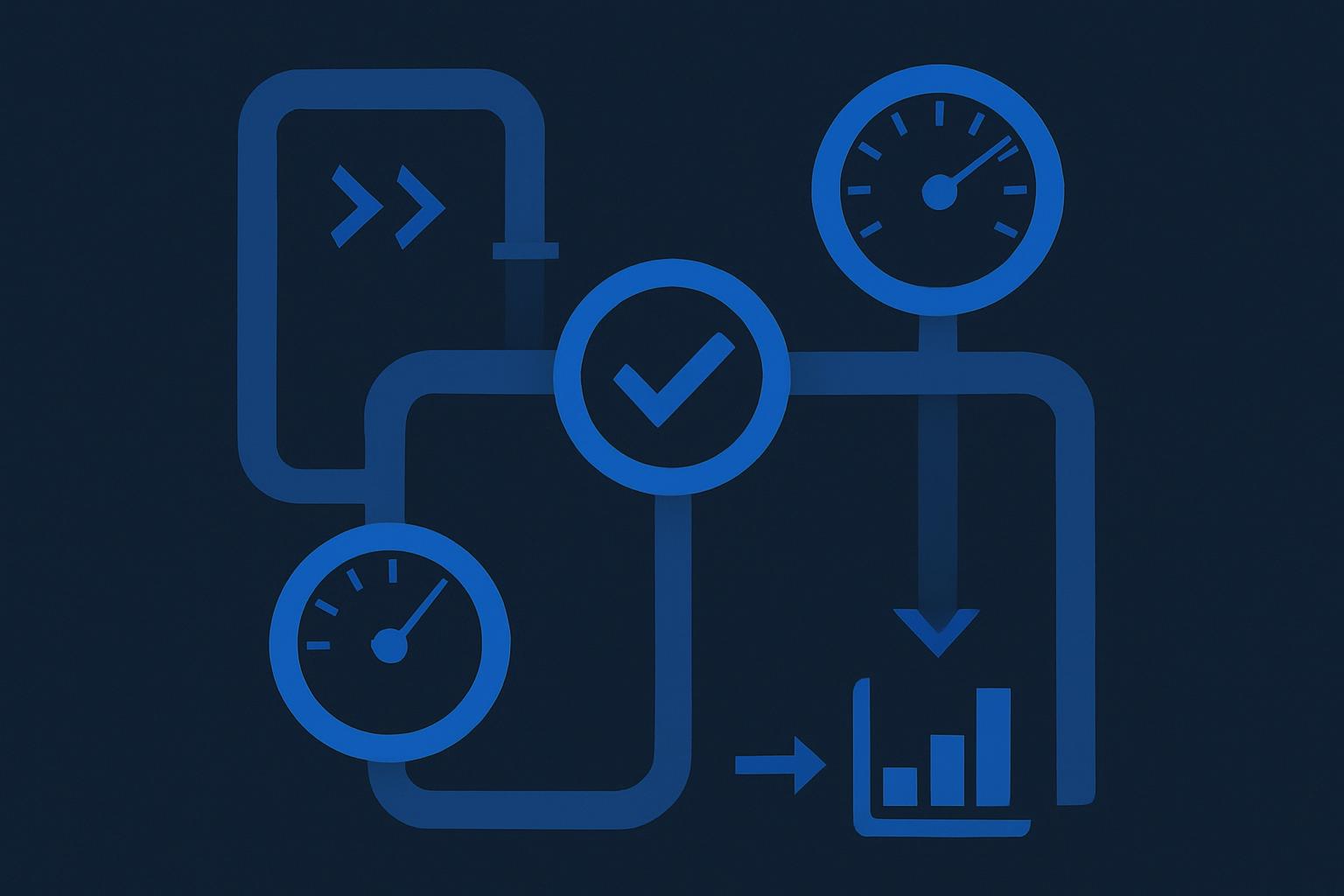
Data profiling acts as the quality control station for analytics—identifying patterns, outliers, and data gaps before modeling or loading into BI systems. This process is critical for robust pre-modeling and data integration, forming the backbone of reliable analytics pipelines.
Importance
Ensures Data Fitness
By uncovering data statistics, outliers, and missing values, data profiling gives BI teams confidence that the data feeding into models or dashboards supports sound decisions. Using profiling as a quality control station reduces downstream errors and costly rework.
Accelerates Model Development
A rigorous profiling step up front minimizes time lost to model debugging and feature engineering adjustments. Data Engineers and Analysts can proactively resolve data issues, enabling faster iteration and more accurate ML outcomes.
Improves Data Integration
Profiling helps standardize data sources before loading into centralized systems. Identifying inconsistencies, such as schema mismatches or field anomalies, allows for early intervention and smoother ETL processes, which is vital for large-scale BI operations.
Boosts Regulatory Compliance
Compliance-focused sectors rely on data quality. Data profiling detects anomalies that could cause compliance failures, acting as the first defense—particularly relevant for regulated domains such as finance or healthcare.
Related Tech
Great Expectations
This open-source profiling and quality control framework helps automate the detection of missing values, anomalies, and schema changes, making it an effective station for continuous data validation.
Pandas
Pandas offers DataFrame-based profiling—engineers and analysts can quickly compute descriptive statistics, explore outliers, and review nulls as part of the data profiling workflow.
Talend
Talend's data integration suite includes profiling features that automatically scan, summarize, and flag problematic data before loading, connecting the quality control metaphor directly to the ETL pipeline.
Common Use
Pre-model Data Assessment
Before machine learning or analytics modeling, analysts conduct profiling to map core statistics, distribution spreads, detect missing data, and identify anomalies—serving as a vital checkpoint in the quality control process.
Data Source Evaluation
When onboarding new sources, Data Engineers use profiling to assess integrity and fit. This prevents latent quality problems from interrupting the BI production line, especially important during M&A or platform consolidation.
ETL/ELT Workflow Optimization
Profiling inserted at ETL checkpoints verifies transformations are correct and data remains consistent, reducing reprocessing time. This keeps the quality control system running efficiently in production environments.
Who Needs To Know
Understanding of Data Structures
To use profiling effectively, practitioners must know how tables, fields, and relationships are structured—a prerequisite for accurate anomaly detection and remediation.
Governance Requirements
Profiling must align with organizational data governance, including privacy standards and documentation protocols, ensuring that quality control doesn’t conflict with regulatory boundaries.
Profiling Automation
Automated tools like Great Expectations or Talend can scale profiling across large datasets, but require disciplined configuration and regular review to maintain trust in results.
Advantages
Reduces Data Cleansing Time
Early detection of structural and content issues allows teams to address problems before they propagate, reducing total data preparation hours by 20–40%.
Improves Decision Confidence
With fewer outliers or gaps entering models and reports, business stakeholders and analysts gain trust in the insights produced, as highlighted in the ETL optimization example.
Saves Storage and Processing Costs
By flagging redundant or irrelevant data prior to loading, profiling supports leaner storage footprints and faster query performance, particularly in cloud BI ecosystems.
Challanges
Dealing with Large Volumes
Profiling petabyte-scale datasets strains tool performance; mitigate by profiling representative samples and automating batch runs.
Continuous Monitoring
One-off profiling isn’t sufficient. Build recurring quality control steps into pipelines to capture drifting anomalies, using tools like Great Expectations to enforce checks.
Interpreting Complex Anomalies
Sophisticated outlier patterns or mixed-type fields can elude straightforward profiling. Leverage advanced statistical modules or anomaly detection libraries for better visibility.
Other Terms
Data Quality
While data profiling is about assessment and discovery, data quality includes ongoing rules, monitoring, and remediation.
Data Cleansing
Profiling often precedes cleansing, which is the process of correcting or removing bad data identified during profiling.
Data Auditing
Auditing is a broader concept that can include profiling, but also looks at the processes and lineage around data movement.
A few Examples
Retail Pre-load Profiling
A retailer used Pandas profiling to check for nulls and unusual sales values before integrating customer data into their BI dashboard, preventing revenue-impacting reporting errors and reducing load troubleshooting by 30%.
Healthcare Dataset Evaluation
A healthcare provider applied Great Expectations to verify patient record completeness and age outliers prior to analytics model training, increasing model accuracy and regulatory confidence.
FAQ
Is data profiling only for large datasets?
No, profiling benefits organizations of all sizes. Even with small datasets, early assessment uncovers issues that could cascade and cause analytic errors later.
How often should data profiling be performed?
Ideally, profiling is integrated as an automated, recurring step in data pipelines—not just during the initial load. Ongoing checks catch drift and new anomalies.
Can profiling replace full data quality management?
No, it is a foundational step within broader quality initiatives. Profiling assesses, but ongoing rules, remediation, and user feedback are required for sustained confidence.
Summary
Keep Analytics on Track with Data Profiling
Just as the quality control station is indispensable on a production line, robust data profiling is vital for early detection of outliers and issues—safeguarding the flow from raw data to trusted insights. Nogamy helps organizations embed these quality control mechanisms, ensuring data pipelines run efficiently and reliably from the start.
Talk to Nogamy’s BI & AI team.
Meet with the experts at Nogamy.co.il to design a data profiling and quality control process that fits your organization’s analytics needs.